

Our Highest Court or Our Ruler?
This is the second in a series of articles focused on interpretation of our written Constitution
Whoever hath an absolute authority to interpret any written . . . laws, it is he who is truly the lawgiver, to all intents and purposes, and not the person who first spoke or wrote them.
Bishop Hoadly’s Sermon, preached before the King of England, 1717
WE, the People, as the sovereign populace in America, have the duty and obligation to know and understand the role of the federal judiciary and the extent and limits of its powers, especially those of the Supreme Court, as the highest court in the land and the Court of last resort on all cases arising out of the Constitution.
Under our written Constitution, America’s federal judiciary is the most independent and most powerful in the world. Nineteenth-century French political philosopher, Alexis de Tocqueville, described the vast and unequalled powers of the Supreme Court.
No nation ever constituted so great a judicial power as the Americans. . . . The tranquillity (sic) and the very existence of the Union depend on the discretion of the seven [now nine] Federal Judges.
***
. . . a more imposing judicial power was never constituted by any people. The Supreme Court is placed at the head of all known tribunals, . . .[3]
Article III of the Constitution details the structure, powers, and jurisdiction of the federal judiciary. Section 1 expressly vests all “the judicial Power of the United States” in the Supreme Court, and lower courts established by Congress.[4] The written text of the Constitution expressly ensures that federal judges enjoy substantial independence. First, all federal judges are appointed by the President of the United States, with the advice and consent of the Senate;[5] they are not elected. Second, they are appointed for life, and neither the President nor Congress have the unilateral power to remove or replace a duly appointed federal judge, except for lack of “good Behavior.”[6] Finally, they are vested with all of the Nation’s “judicial Power,” free of interference or accountability from the other branches of government or the pressures of the political or election processes.
In addition to independence, Article III, Section 2, grants federal courts broad judicial powers to decide “all Cases, . . . arising under this Constitution” and “Controversies” involving the United States, the independent States, private citizens, and/or foreign states. And, under its powers of “judicial review[7],” the Supreme Court has plenary authority, as the court of last resort, to review and strike down any and all legislative acts and statutes, both federal and state, that it deems unconstitutional.
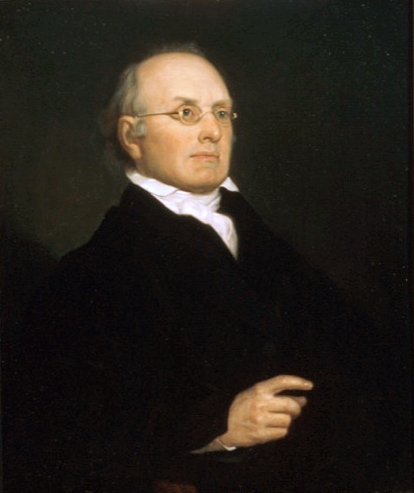
Finally, as part of its Article III powers, the Supreme Court has the final authority to interpret the text and meaning of the Constitution. According to Justice Joseph Story, an American legal scholar and associate Supreme Court justice (1811-1845), the “express, and determinate provisions [of the text]” of Article III necessarily include the power to interpret the Constitution:
The constitution is the supreme law; the judicial power extends to all cases arising in law and equity under it ; and the courts of the United States are, and, in the last resort, the Supreme Court of the United States is, to be vested with this judicial power. No man can doubt or deny, that the power to construe the constitution is a judicial power.[8]
Justice Story recognized that decisions of the Supreme Court, as the highest court in the land, “are considered, as establishing the true construction of the laws.” Thus, when it comes to what the text of our written Constitution says and means, the Supreme Court wields tremendous judicial power.
The broad independence and immense powers of the federal judiciary, and especially the Supreme Court, were topics of intense debate during the ratification era. Anti-federalists, like Robert Yates, were concerned that the Supreme Court would be unaccountable to the other branches of government, the people, or even “heaven itself” and that Supreme Court justices, therefore, would substitute their own will for the will of the people:
. . . . [T]hey have made the judges independent, in the fullest sense of the word. There is no power above them, to control any of their decisions. There is no authority that can remove them, and they cannot be controlled by the laws of the legislature. In short, they are independent of the people, of the legislature, of every power under heaven. Men placed in this situation will generally soon feel themselves independent of heaven itself.[9]
Yates was especially concerned that an unaccountable Supreme Court, as the final authority on cases arising out of the Constitution, would not rule based on the Constitution’s text but, instead, “according to what appears to them, the reason and spirit of the constitution.”[10] Moreover, he was concerned that in exercising the power of “judicial review” to strike down legislative acts that it deemed unconstitutional, the Supreme Court would effectively “control the legislature.”
The judges in England are under the controul (sic) of the legislature, . . . But the judges under this constitution will controul (sic) the legislature, for the supreme court are authorized in the last resort, to determine what is the extent of the powers of the Congress; they are to give the constitution an explanation, and there is no power above them to set aside their judgment.
***
. . . The supreme cort [sic] then have a right, independent of the legislature, to give a construction to the constitution and every part of it, and there is no power provided in this system to correct their construction or do it away. If, therefore, the legislature pass any laws, inconsistent with the sense the judges put upon the constitution, they will declare it void; and therefore in this respect their power is superior to that of the legislature.[11]
On the other hand, Federalists, led primarily by Alexander Hamilton, defended the independence and broad powers of the federal judiciary. First, Hamilton argued the judicial branch needed independence because it was the “weakest” and “least dangerous” of the three branches; it had neither “the sword” (executive branch), nor “the purse” (legislative branch).[12] Further, he defended life tenure for federal judges on the premise that they would be men of high character and integrity, who would exercise true fidelity to the Constitution. Life tenure, he argued, was necessary to encourage men with high character and the requisite “knowledge” and “skill” derived from “the long and laborious study” to give up a lucrative legal career and accept an appointment as a federal judge.
Second, Hamilton argued that because the judiciary had “neither FORCE nor WILL, but merely judgment,” life tenure was necessary to protect it from the other branches.
. . . . from the natural feebleness of the judiciary, it is in continual jeopardy of being overpowered, awed, or influenced by its coordinate branches; that as nothing can contribute so much to its firmness and independence as permanence in office, this quality may therefore be justly regarded as an indispensable ingredient in its constitution, and, in great measure, as the citadel of the public justice and public security.[13]
Third, Hamilton explained that the federal courts were “to be considered the bulwark of a limited Constitution against legislative encroachment,” and the independence of the federal judiciary was critical to ensure the “faithful performance of so arduous a duty.” Only through political independence, could the Supreme Court operate as an effective check on the powers of the legislature by declaring “acts contrary to the manifest tenor of the Constitution” to be void. This power of “judicial review” was crucial to ensure that the legislature acted within its delegated constitutional authority; Without it “the representatives of the people [would be] superior to the people themselves” and would be able “to substitute their will to that of their constituents,” and the “servant” would end up ruling “the master.”
Fourth, Hamilton argued that as a critical part of the power of “judicial review,” the Court had the authority to interpret the Constitution and “ascertain its meaning.”
The interpretation of the laws is the proper and peculiar province of the courts. A constitution is, in fact, and must be regarded by the judges, as a fundamental law. It must therefore belong to them to ascertain its meaning, as well as the meaning of any particular act proceeding from the legislative body. If there should happen to be an irreconcilable variance between the two, . . . the Constitution ought to be preferred to the statute, the intention of the people to the intention of their agents.[14]
Finally, Hamilton pointed out that the Supreme Court’s independence was NOT absolute. The Court was bound to adhere to the “established form” of the Constitution, its written text, which is the will of and can be only changed by the sovereign people. While the Court has broad powers to interpret the Constitution and to declare unconstitutional legislative acts void, it is bound by the written text of the Constitution. In fact, the very purpose of the Court’s power to strike down unconstitutional legislative acts was to uphold the will of the people, as “declared” in text of the written Constitution, over a contrary and unconstitutional will of the legislature “declared in its statutes.”
Nor does this conclusion by any means suppose a superiority of the judicial to the legislative power. It only supposes that the power of the people is superior to both; and that where the will of the legislature, declared in its statutes, stands in opposition to that of the people, declared in the Constitution, the judges ought to be governed by the latter rather than the former.[15]
Thus, the independence of the Supreme Court is not absolute; it is limited by the “will of the people” as set forth in written text of the Constitution.
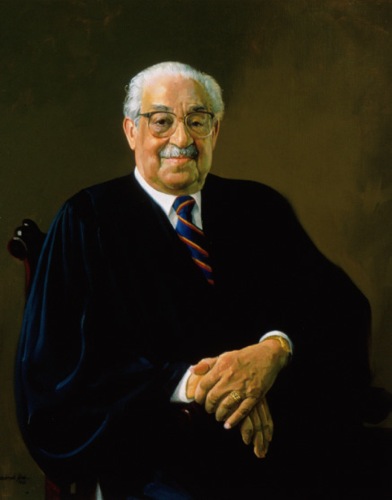
In 1803, Chief Justice Marshall, in landmark case, Marbury v. Madison[16], confirmed the Supreme Court’s power of “judicial review” as a matter of constitutional law. He reiterated that the written Constitution, as “the fundamental and paramount law of the nation,” was “put on paper . . . for all to see and read.” And, the “particular phraseology” of the Constitution’s text defines the powers and limits of the government. Those powers and limits represent the will of the people, are “permanent” and, therefore, are written down so “that those limits may not be mistaken, or forgotten.”
There is no doubt that the Supreme Court is incredibly powerful and independent; however, its power and independence is not absolute. In the course of interpreting our written Constitution, Supreme Court justices are limited by and bound to follow the “will of the people,” as found in the “particular phraseology” of its text.
Unfortunately, some Supreme Court justices are willing to ignore the text of the Constitution and decide cases “according to what appears to them, the reason and spirit of the constitution.” Rather than “declare” the law, as written, they “make” law in order to achieve a result in line with their own socio-political ideology and agenda, or what they believe a “Living Constitution” should say in this modern day and time. Apparently, as feared by Anti-Federalists, some Supreme Court justices do not feel accountable to anything or anyone, including the sovereign people and even tend to “feel themselves independent of heaven itself .”
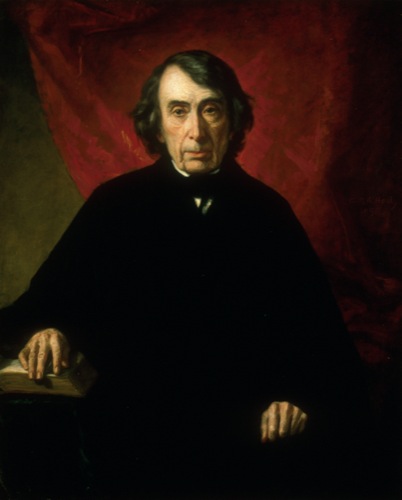
Chief Justice Taney did just that in 1857 when he wrote the majority opinion for the Supreme Court in Dred Scott v. Sanford, holding that that people of African descent were not intended to and could never be American citizens under the Constitution. He manipulated the text and historical context of the Constitution to reach what has come to be viewed as a horribly “pernicious” constitutional decision.
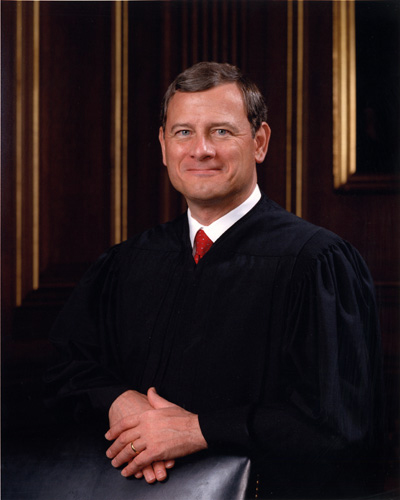
More recently, in 2015, the Supreme Court’s ruling, in Obergefell v. Hodges, finding that the right of same-sex couples to marry was a constitutional right, likewise had no basis in history, tradition, or the text of the Constitution. In a dissenting opinion, Chief Justice Roberts compared the Court’s ruling in Obergefell to Chief Justice Taney’s misguided attempt to manipulate and pervert the text of the Constitution, in Dred Scott, in order to “settle” a contentious socio-political issue.
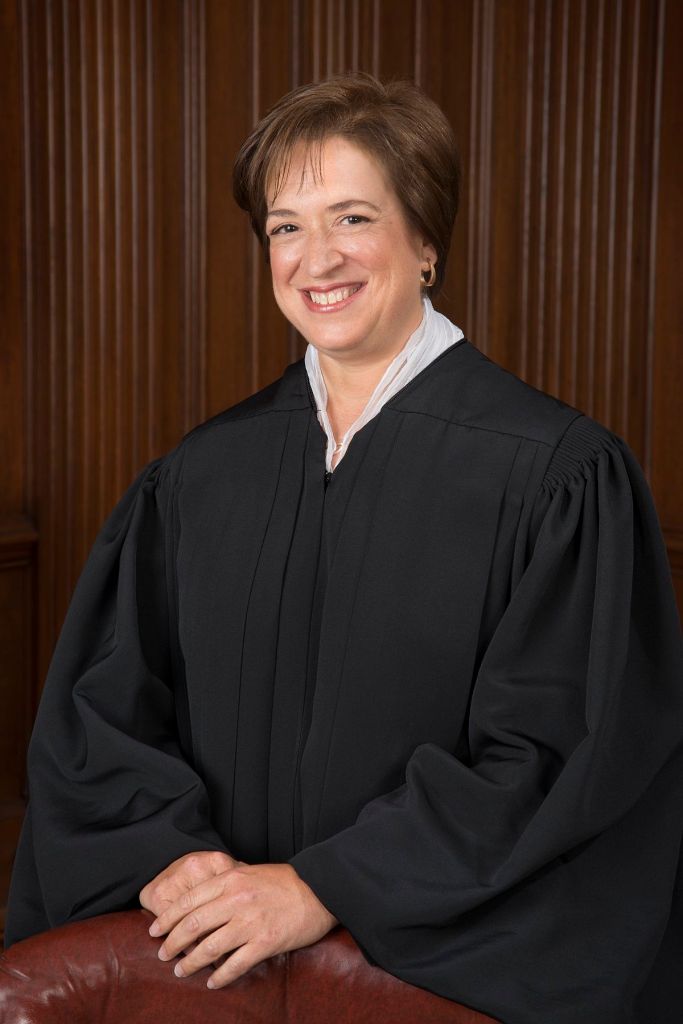
In Brnovich v. Democratic National Committee, a recent case in which the Supreme Court upheld Arizona voting laws, Justice Kagan wrote a scathing dissenting opinion that read more like a diatribe written by a Critical Race Theory activist than a judicial opinion from a Supreme Court justice. And, during a recent oral argument hearing in NFIB v, Dept. of Labor (OSHA), addressing the constitutionality of the federal government’s COVID vaccine mandate, Justice Sotomayor made numerous patently false statements about the impact of COVID-19, presumably to buttress her support for the mandate. Are these examples of “good Behavior” becoming of Supreme court Justices . . . or not?
It is up to us, the sovereign People, to know and understand the scope and limits of the Supreme Court’s judicial power. We need to remember that while the Supreme Court’s powers and independence are broad, they are NOT absolute. And, when Supreme Court justices ignore the text of our written Constitution and decide cases based on their personal ideology or social agenda to settle a “contentious” social or political issue, we need to stand up and make our voices heard.
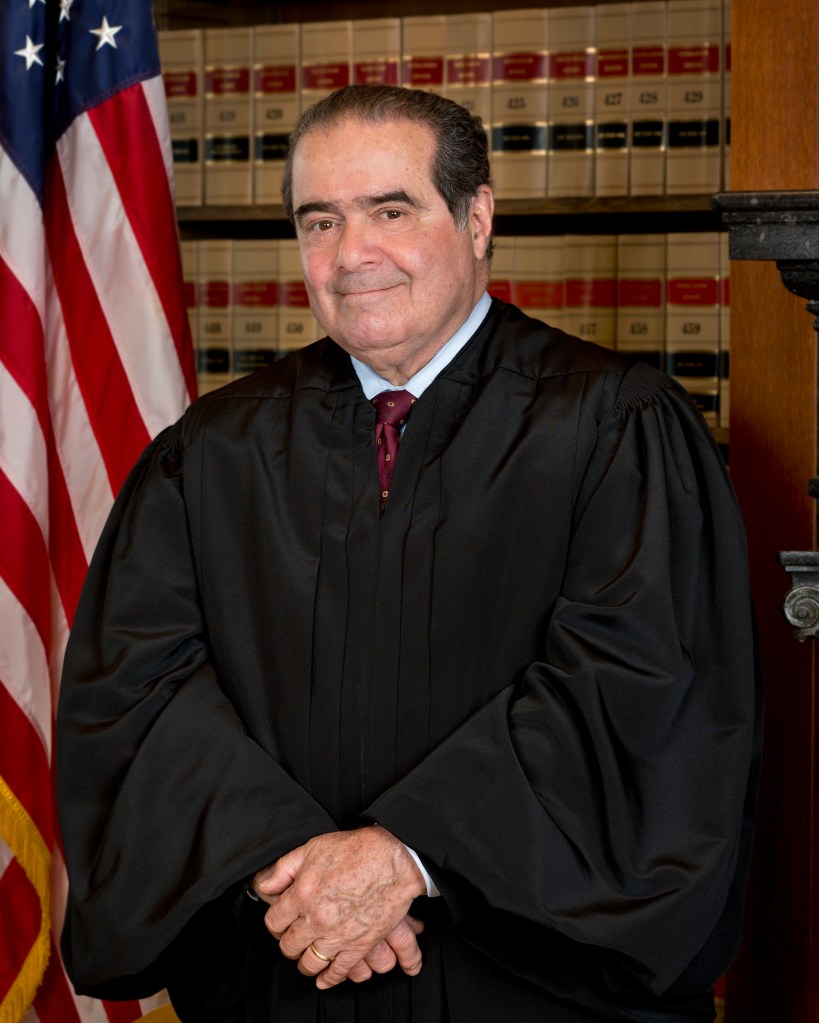
We are still, after all, the sovereign power in America and must hold Supreme Court justices to account when they exceed their authority and fail to act in “good Behavior” or else, as warned by Justice Antonin Scalia in his dissenting opinion in Obergefell, we will find ourselves being ruled by “majority of the nine lawyers on the Supreme Court.”
END NOTES
[1] This is the second in a series of articles on America’s Written Constitution.”
[2] Constitutional Law, 6th Ed. Lockhart, Kamiser, et al., (1986), at 1 (quoting Bishop Hoadly’s Sermon, preached before the King of England, 1717).
[3] Alexis de Tocqueville, Democracy in America, Vol. 1, Chapter VIII: The Federal Constitution: Part IV, at 165 (1835/1840) (emphasis added)
[4] Article III, Sec. 1, provides, in pertinent part, that “[t]he judicial Power of the United States is vested in one supreme Court, and other inferior Courts as the Congress may . . . ordain and establish.” (Emphasis added). There 94 district courts, Congress has “established” 13 circuit courts of appeal, and two special trial courts, the Court of International Trade and the U.S. Court of Federal Claims. As the highest court in the United States, the Supreme Court is superior to all other courts, federal and state, and the final authority on all cases arising out of the Constitution.
[5] See Article II, § 2, cl.2.
[6] U.S. Const., Art III, § 1, provides that “[t]he Judges, both of the supreme and inferior Courts, shall hold their Offices during good Behavior . . . [and their] Compensation, . . . shall not be diminished during their Continuance in Office.” (Emphasis added). Notably, Samuel Chase is the only Supreme Court justice that has ever been impeached by the House of Representatives; however, he was acquitted by the Senate (1805). And, impeachment of lower court judges also has been very rare and removal from office even rarer.
[7] The power of “judicial review” was hotly debated by the Framers during the ratification period. but was confirmed in 1803, as a matter of constitutional law, in the landmark case, Marbury v. Madison.
[8] Joseph Story, Commentaries on the Constitution of the United States (1833) (emphasis added).
[9] The Anti-Federalist Papers and the Constitutional Convention Debates, Brutus XV(March 20, 1788), 305-306 (Ralph Ketcham, Ed.; Signet Classic Printing 2003) (emphasis added). Yates published essays opposing the proposed constitution under the pseudonym “Brutus,” in a collection of essays known as the Anti-Federalist Papers.
[10]Anti-Federalist Papers, Brutus XI (Jan. 31, 1788) at 295.
[11] Anti-Federalist Papers, Brutus XI (Jan. 31, 1788) (emphasis added).
[12]See The Federalist: A Commentary of the Constitution of the United States, Ed. Robert Scigliano (2001), at 496 (quoting Alexander Hamilton, Federalist 78 (June 14, 1788)) (emphasis added). Hamilton, along with John Jay, and James Madison, published essays collectively under the pseudonym “Publius” in favor of the proposed constitution, Those essays became known as the Federalist Papers. Hamilton’s commentary on the powers and independence of the federal judiciary is primarily found in Federalist Paper No. 78.
[13] Hamilton, Federalist 78, at 496-497 (emphasis added)..
[14] Id. at 498-499 (emphasis added).
[15] Hamilton, Federalist No. 78, at 499 (emphasis added).
[16] 5 U.S. 137 (1803).
 Cowboy Law
Leave a comment